
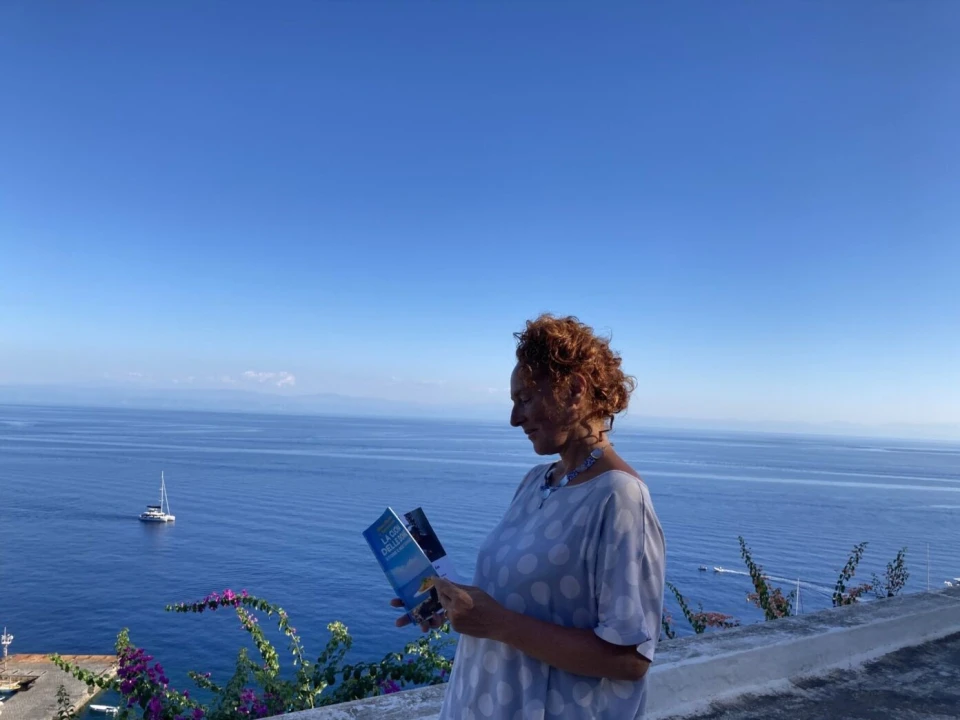
Wild, remote, unspoiled. These are the adjectives that surface, on cue, whenever Filicudi—one of the smallest of the Aeolian Islands—comes up. Words that, rather than describe, flatten the more than 700 meters of this volcanic island north of Sicily, reducing it to a laminated postcard. And really—who would ever call their own home “wild”?
The pointed island we see today—the first to emerge, 600,000 years ago, from the depths of the Tyrrhenian Sea—is the summit of a volcano that descends for 1,600 meters, a depth that doubles its height. A submerged, invisible body that nonetheless supports everything visible above. So it is with Filicudi’s history: we know the part that emerges—gorgeous sunsets, fabulous vacations—but those who nourish and sustain it remain offstage. Often behind closed doors.