

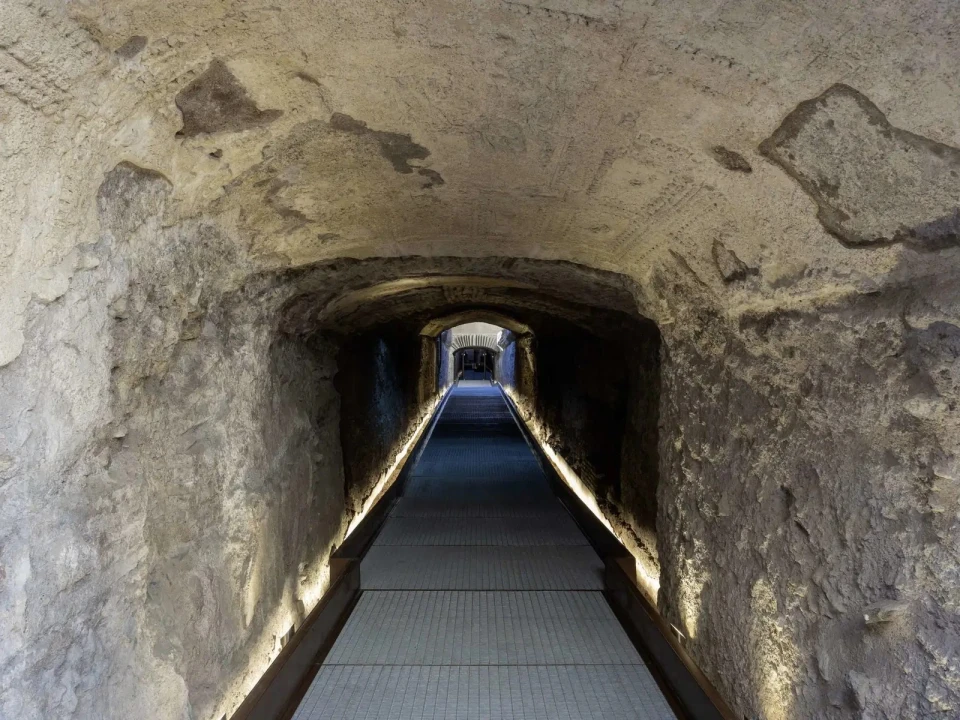
In Rome, the Colosseum Archaeological Park opens for the first time to the public the so-called Passage of Commodus, a vaulted underground passageway, partially illuminated and ventilated by wolf’s mouths, which in the imperial age connected the stage of honor of the Flavian Amphitheater with the exterior of the monument. The corridor, originally reserved for the high hierarchies of the Empire, today represents one of the most fascinating testimonies to the complex architecture of the Colosseum and its historical stratification.
The Passage of Commodus united the pulvinar, the imperial box located at the southern end of the minor axis of the amphitheater, to the outside, allowing emperors to reach their tribune without crossing the areas designated for the public. Not planned during the construction of the Colosseum, it was carved out later, at the turn of the first and second centuries AD, by digging directly into the foundations of the building.