
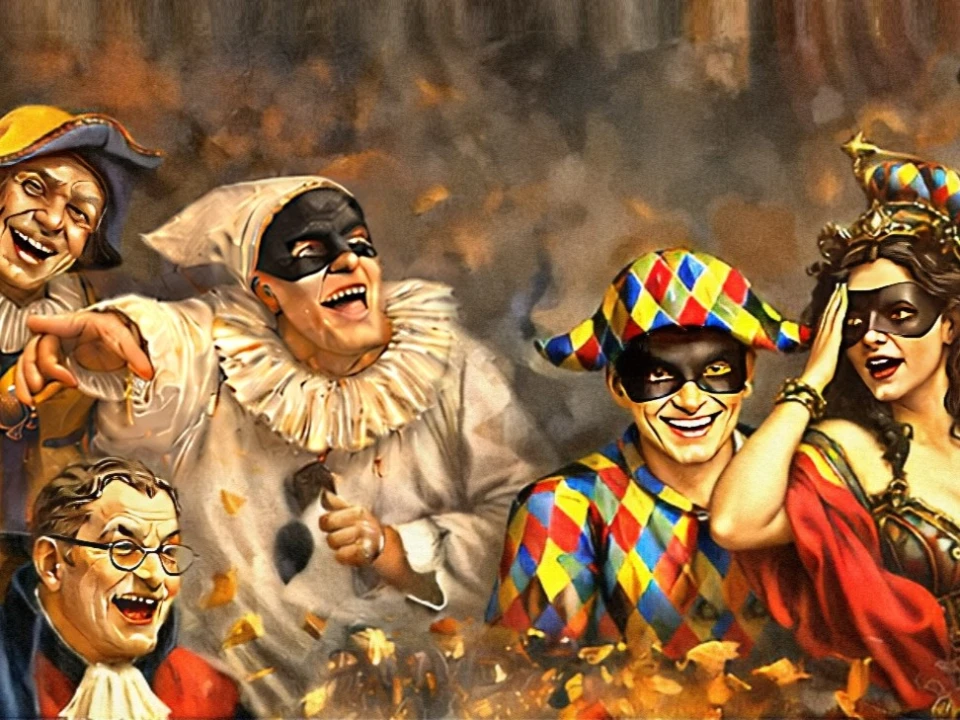
For much of Italy’s past, social order was more than an abstract idea, it was visible in clothes, speech, and gesture. People were expected to stay in their place, and they usually did: in cities and small towns alike, status came with rules about who could speak freely, who had to show deference, and how a body should behave in public. Carnevale grew inside that world.
It’s the reason why older descriptions of carnival often sound dramatic to us modern readers: when communities were more rigidly stratified, a few days of masks, parody, and noisy street theater could really feel like a controlled breach in the wall; today, in a society that is already more informal, and where transgression happens year-round online and in real life, Carnevale rarely “reverses” everyday life in any literal way.