For me, the Carabinieri Corps has always been a symbol of the respect owed to the Italian institutions: and I am not the only one in Italy to believe so. It is always a pleasure, therefore, to be able to host a Carabiniere on We the Italians.
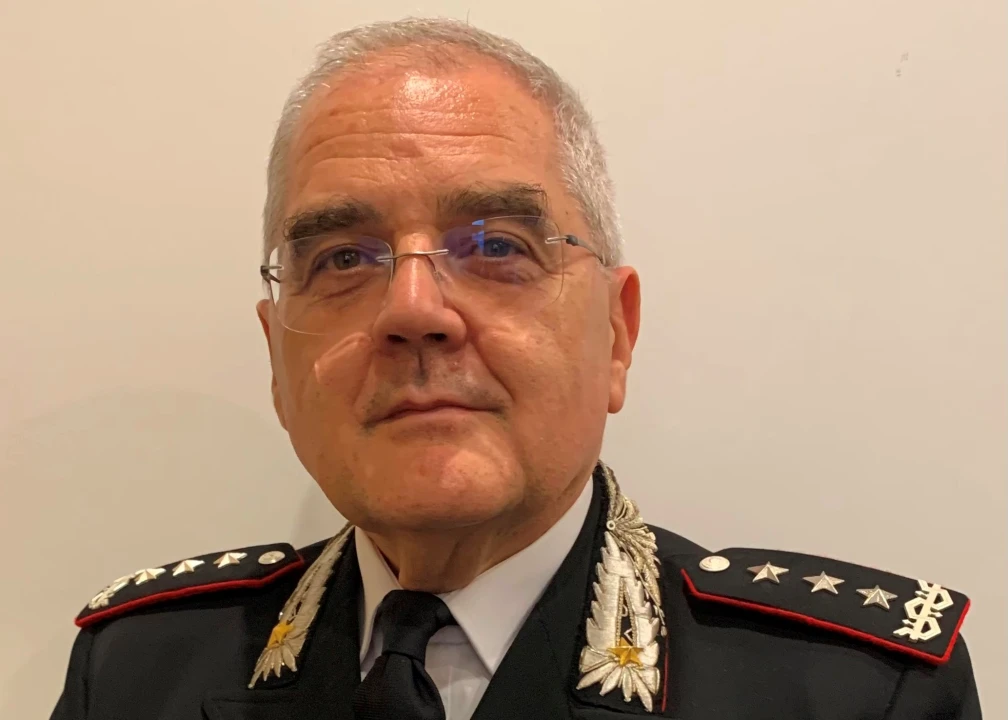
This very welcome occasion is thanks to an exhibition that will be hosted by the UN Secretariate building in New York in May, describing the achievements and merits of the Carabinieri Corps in protecting our environmental heritage. I welcome with pleasure and gratitude General Antonio Marzo, Commander of the Carabinieri's Command of Forestry, Environmental and Agrifood Units.
General Marzo, welcome to We the Italians. The first question concerns you personally: in your long and prestigious career, which contacts did you have with the United States of America?
During my professional life, in the various positions I have held in the territory or at the Carabinieri General Headquarters, I have had the opportunity to work with American military organizations and colleagues on several occasions, to the extent that we have even become friends, as is to be expected among people belonging to different countries but with the same matrix of values and culture.
I am also delighted to be in the United States for the first time, and in particular in New York City where, in addition to representing the Carabinieri Corps at the United Nations headquarters and publicizing its commitment to defending Italy's territory, biodiversity and natural beauty, I also have the personal opportunity to retrace the life of my paternal grandfather who emigrated to the US for work in the early 20th century, living in this city for about 20 years.
I must confess that, personally, the Carabinieri Corps has always been the Italian institution that commands my utmost respect and gratitude. If you were to describe the Carabinieri to our Italian American readers and explain why they are different from other institutions, what words would you choose?
The Carabinieri Corps is 'the People's Corps'. A popular institution, which has always recruited its personnel among the ordinary people, rooted in the Italian history and tradition since before the Italian Nation was formed, which the Carabinieri have, moreover, contributed to the birth and growth, even with heroic sacrifices, and of which today constitutes one of the most important factors of cohesion and identity recognition.
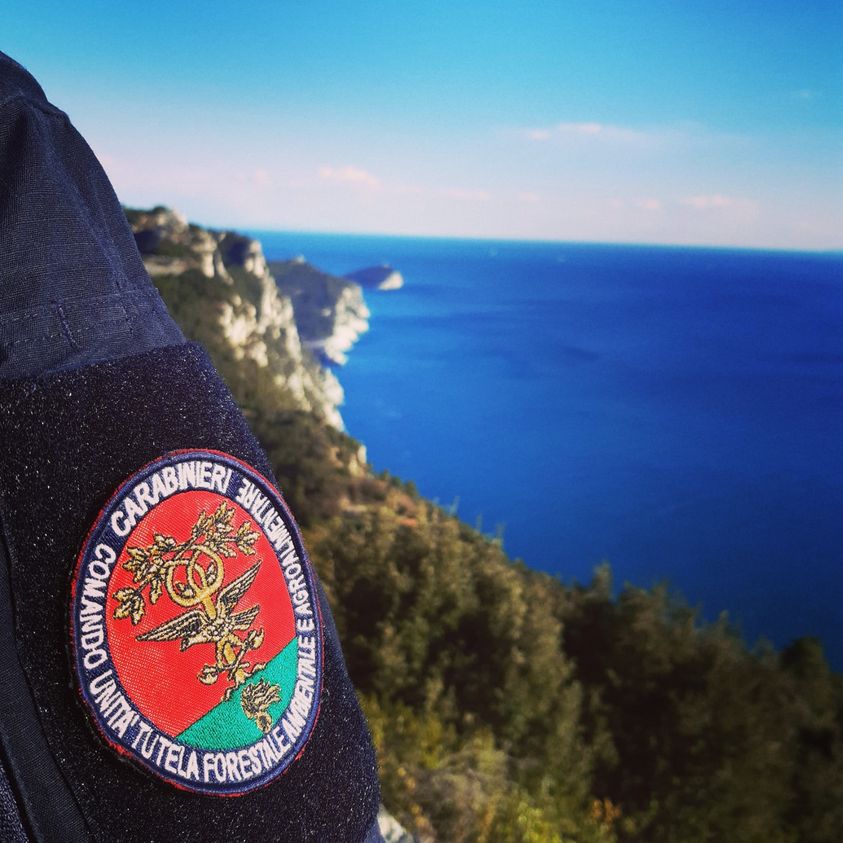
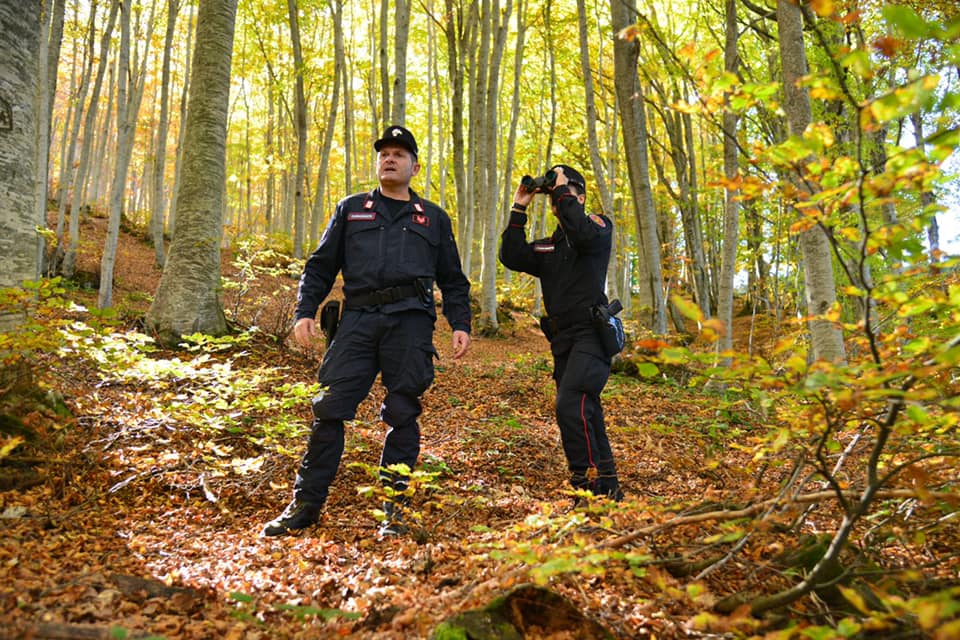
In addition to all cities, the Carabinieri are in fact the only national institution to be widely present, with their reassuring action of proximity to the people and their needs, in small towns, in ancient country villages and, for some years now, with the annexation of the State Forestry Corps and the establishment of the Command of Forestry, Environmental and Agrifood Units, also in areas with little human presence, in Nature Reserves and National Parks, where our great heritage of biodiversity is preserved, which the Carabinieri have the task of protecting and increasing, in fulfilment of a delicate and exciting mission now validated by our Constitution.
You are at the head of the Carabinieri's Comando Unità Forestali Ambientali e Agroalimentari (Carabinieri Command of Forestry, Environmental and Agrifood Units), which boasts a centuries-long commitment to nature protection and conservation. How does your group operate, and how vast is the Italian heritage it protects?
The Command of Forestry, Environmental and Agrifood Units (CUFA) represents today, in terms of staffing levels and number and kind of specialized units, a unique institution worldwide, dedicated to a strategic mission such as the protection of a primary interest for the wellbeing and safety of the entire community, also due to the wide horizontal and transnational dimension in which the perception of the dangers connected to the violent deterioration of environmental conditions is concretely manifested. With its approximately 7,000 military personnel, to which more than 1,300 civilian workers must be added, the Command of Forestry, Environmental and Agrifood Units operates in the four operational sectors of Forest and Parks Protection, Biodiversity Protection, Environmental Protection and Agri-food Protection.
Within the Forest and Parks Protection Command there is also the Nucleo Informativo Antincendio Boschivo, NIAB (Intelligence Center for Forests Firefighting) for statistical and criminal analysis and technical-scientific-operational support to the 83 Nuclei Investigativi di Polizia Ambientale - NIPAAF (Invastigative Centers of Environmental Police), and a Forest Fire Task Force of 45 military personnel on 12/24-hour operational readiness. The incisiveness of the CUFA's operational set-up, and the consequent perception of safety that it gives back to the community, is determined by the action of the Environmental Protection and Agri-food Protection departments, but above all by the capabilities expressed by the Biodiversity Protection Command, which, with its 28 departments located throughout the country, manages 20 state-owned areas and 130 state nature reserves: an ideal green backbone, extending over 130.000 hectares, which, from Aspromonte to Tarvisio, preserves the distillate of the country's protected areas and represents a unique and coherent management model.
Added to this valuable activity is the capillary and incisive action of the 950 Forestry and Park Stations, which work alongside the territorial Carabinieri to achieve that proximity that represents a bulwark against the spread of tampering and environmental crimes, capable not only of countering and reducing their negative effects, but also of an intelligent and far-sighted action of prevention, developed with numerous training and information initiatives in favor of Schools, Associations and Public Administrations, and with the systematic intensification of training programs of the new Carabinieri Forestali of every role on the various issues concerning the protection of the environment.
With regard to the propensity to develop new operational methodologies, I would like to emphasize how the Command of Forestry, Environmental and Agrifood Units, thanks to the institutional synergies consolidated in the Defense-Security sector, has launched a program for monitoring spectral anomalies, the Smart Forest Monitoring, with the aim of creating an advanced satellite system to detect environmental anomalies in real time and determine the immediate intervention of the most appropriate units throughout the country. The project was also presented at the World Forestry Congress held in Seoul (South Korea) from May 2 to 6 last year, where the commitment to defending forests and the high level of technology achieved by the Carabinieri was recognized.
Next May 22, as every year, we celebrate World Biodiversity Day. What are the most unique features of Italian excellence in this field?
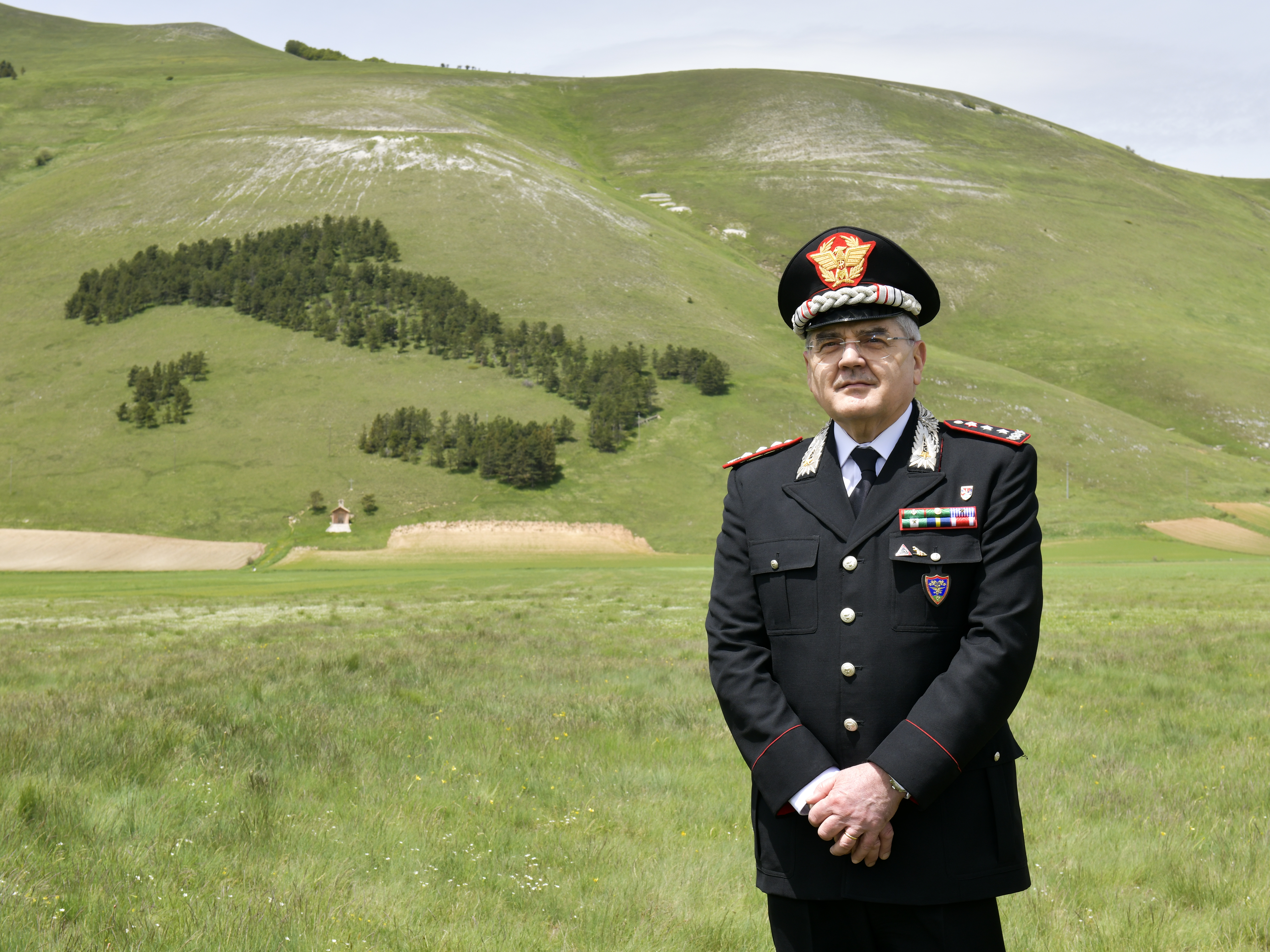
Italy, due to its particular geographical conformation and climate conditions, is the country with the highest concentration of biodiversity in Europe. This unique natural heritage is home to particularly diverse and complex ecosystems where a large number of rare and endangered plant and animal species find refuge.
The ecosystems present in Italy are therefore home to an enormous variability of animal plant species, thanks to the great variety of environments present: from the warm coasts of southern Sicily, where sub-Saharan species are common, to the Apennine and Alpine ranges where it is not difficult to encounter micro-ecosystems with Arctic species.
This is an enormous richness, environmental, genetic, naturalistic, but also cultural and social: because the variability of ecosystems in many areas of the country is associated with a multiplicity of cultures, customs and local habits where human life in harmony with nature is, and always has been, unquestionably normal long before the concept of sustainability was introduced.
This environmental and cultural variability determines an enormous agro-biodiversity that, as we know, is the most important in the world, in terms of quantity but above all in terms of quality. This national heritage, precisely because of its extraordinary value, must be the subject of special and renewed protection, also in the light of the recent and important amendment of Articles 9 and 41 of our Constitution, which place the protection of the environment, biodiversity and ecosystems, especially in the interest of future generations, among the founding values of our legal system.
To celebrate World Biodiversity Day, the Command you lead has created an installation that will be displayed at the UN Glass Palace in New York. Please give us more details about the partners, timing and content of this initiative
May is the month in which World Biodiversity Day is celebrated and, on this occasion, the Carabinieri Corps wants to raise public awareness of the extraordinary wealth of biodiversity found throughout Italy and of the indispensable need to preserve its integrity.
As part of environmental diplomacy initiatives aimed at promoting Italy's commitment to protecting the environment, the Command of Forestry, Environmental and Agrifood Units, under the coordination of the Permanent Representation of Italy to the United Nations, in collaboration with the Italian Air Force, Leonardo and Telespazio Companies, will hold an exhibition on the activities of this Command to be held in New York from May 8 to 18 at the UN Secretariate Building, in preparation for World Biodiversity Day.
The exhibition will tell the story of the Carabinieri's centuries-long commitment to the protection and conservation of nature and will highlight, in particular, CUFA's commitment to the protection and conservation of biodiversity. Through an imaginative journey through Italy's extraordinary natural environments, it will also be possible to get to know its most remote secrets and appreciate the commitment and skills deployed by the Carabinieri to defend our country's precious natural treasures.
I read that the installation was realized with the aid of cutting-edge technology and interactive media of great emotional impact, designed entirely by Micromegas, a leading Italian company in institutional and corporate communication. Can you tell us more?
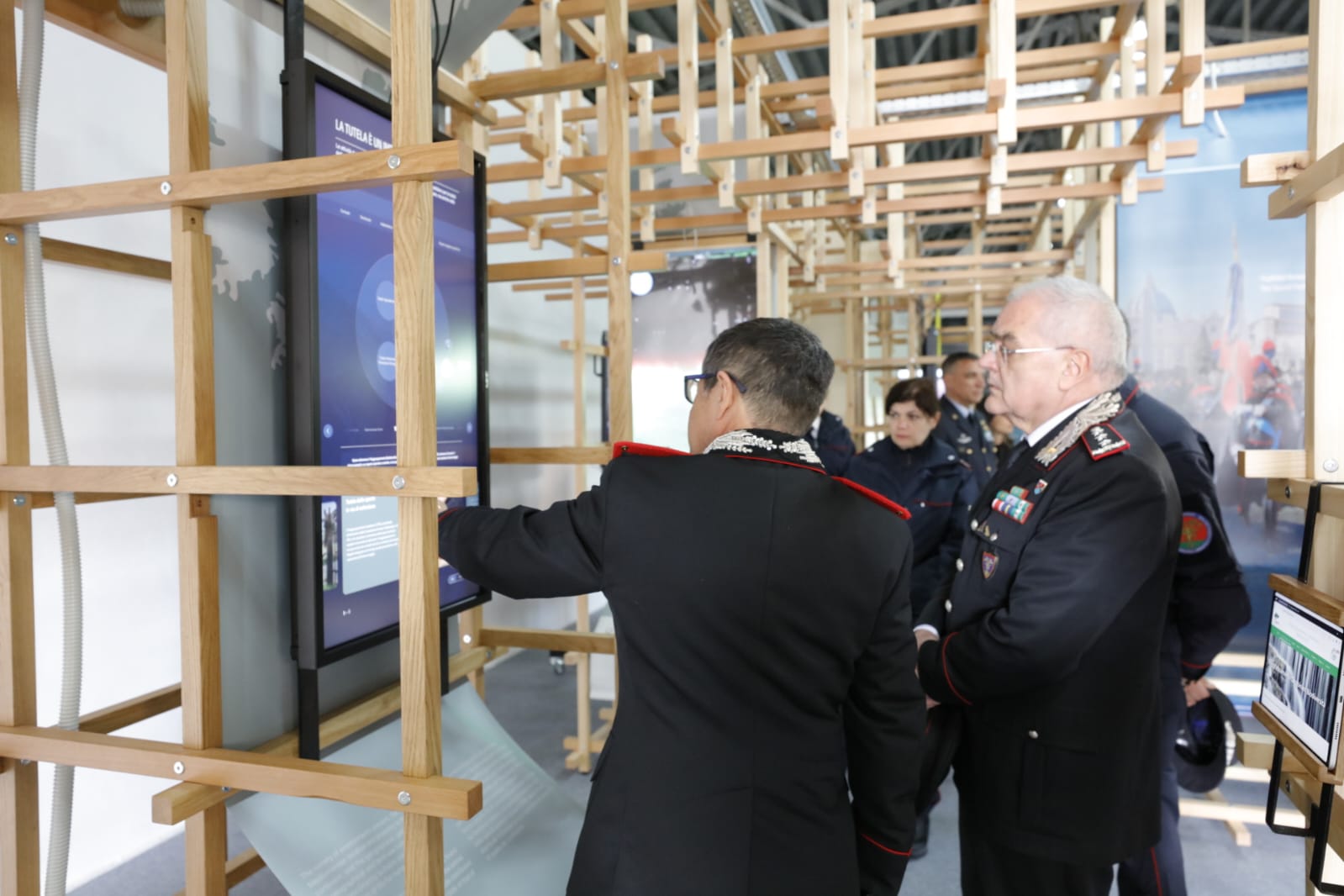
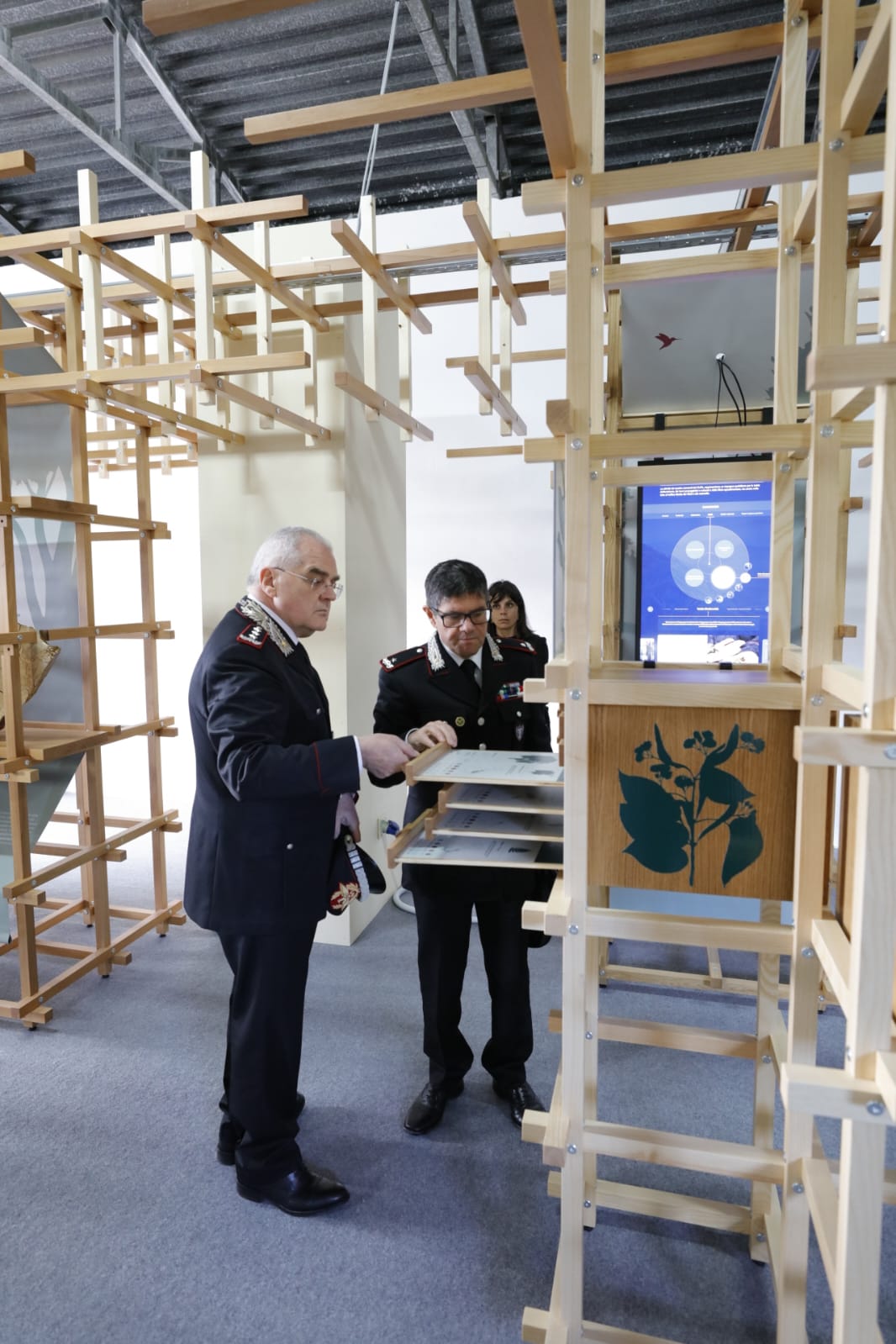
The idea behind the installation is to take the visitor inside a virtual forest. With the aid of cutting-edge audiovisual technologies and highly interactive computer supports of great emotional impact, it will be possible to discover the enormous wealth of Italian biodiversity exploding in its many forms and colors, where every sound, every tree, every living form are fragments of the heritage that we have the task of preserving for future generations. A conceptual forest that sums up all the facets and extraordinary places that must be guarded and preserved.
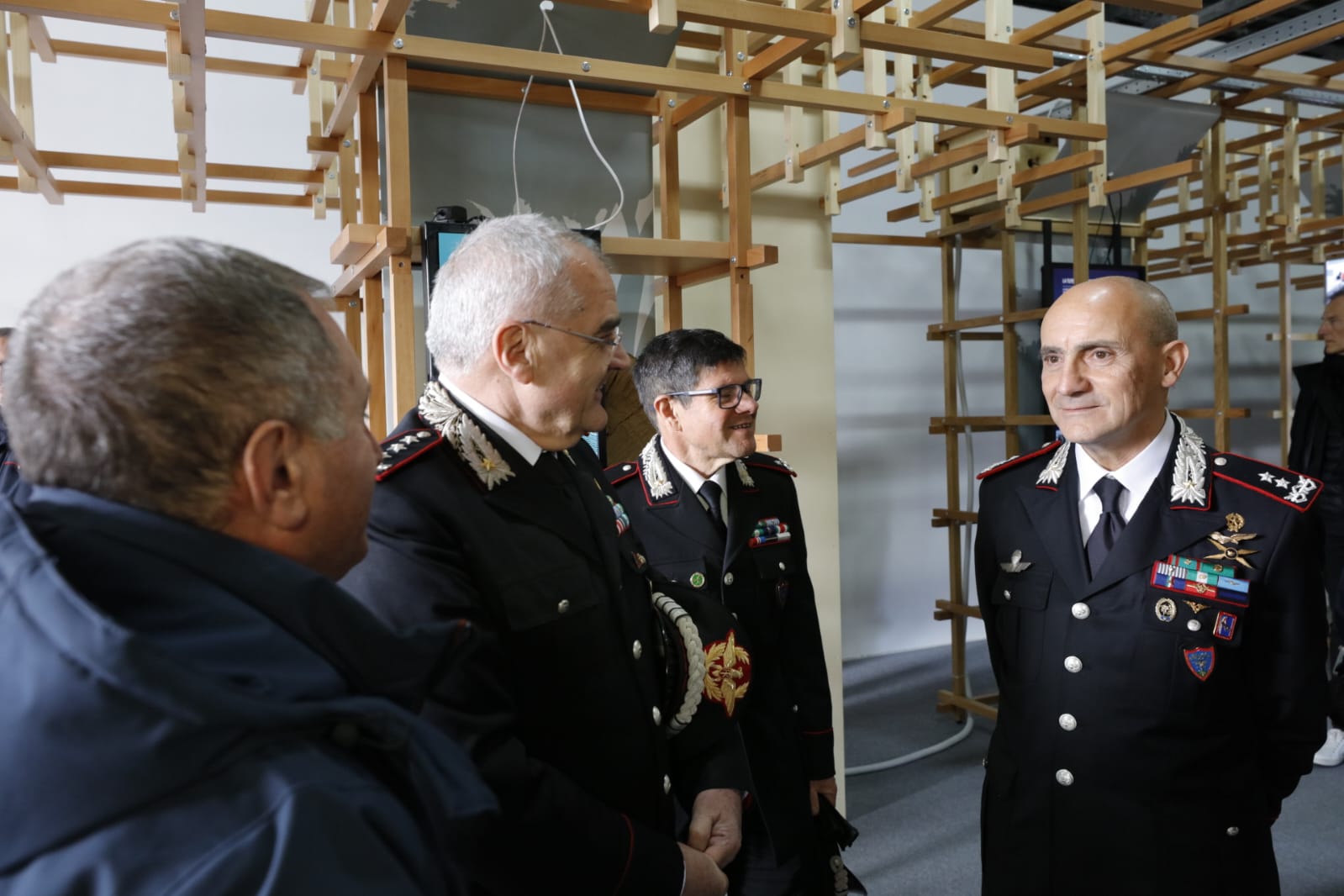
Particular attention will also be paid to the involvement and participation of visitors, for whom short thematic meetings with organized groups or particular stakeholders can be planned thanks to special structures integrated into the installation. It is a forest of wonders, a dynamic museum that puts us in touch with the hidden corners of Italy and shows us how the Carabinieri Corps is committed, through its dedicated branches spread throughout the country, to preserving this priceless heritage.
Italian biodiversity explodes in its many forms and colors; every sound, every tree, every living form are fragments of the heritage that we must preserve and improve. It is for this noble objective that we have designed this exhibition to consolidate, in the consciousness of all those who visit it, the awareness of the need to continue, through knowledge, on the difficult road of defending and conserving nature.
Particular attention was also paid to the materials with which the installation was made. The timber, belonging to four different species (beech, fir, ash and oak) comes from plants that died of natural causes within the nature reserves managed by the Carabinieri for biodiversity. This wood continues to represent an important carbon sink. In fact, the entire structure weighs about 3,200 kg and represents a reservoir of about 6,500 kg of CO2.
Surely innovative for events of this type was then the idea of calculating the carbon footprint and, above all, the related neutralization measures, the evaluation of which was entrusted to the University of Tuscia. In short, the Life Cycle Assessment (LCA) system was used to calculate the carbon dioxide equivalent that all phases of the exhibition's realization have produced and will produce.
Following this study, possible forms of mitigation, necessary to reduce the carbon footprint generated to zero, were then evaluated, which include the adoption of interventions that could lead to the absorption of an equal amount of carbon dioxide.
As is well known, one of the most widespread and certainly most efficient forms of mitigation is the planting of trees in areas without vegetation. Therefore, in order to make the exhibition Carbon Free, the planting of approximately 5500 trees was estimated to be sufficient.
To this end, the Biodiversity Group has already identified more than 6,000 plants of different species, produced by its own forest nurseries in Pieve Santo Stefano (Tuscany) and Peri (Veneto), which will be planted next autumn in already identified areas managed by the Carabinieri Biodiversity Grouping.
These plants will allow the carbon dioxide produced by the event to be absorbed in one year while producing a positive balance for the rest of their lives. The trees planted will, in fact, form new forest structures that, in addition to continuing to absorb carbon dioxide for the rest of their lives, will produce all the other positive effects that a forest can determine, first and foremost the improvement of biodiversity.
For a project of this magnitude, we chose Micromegas Comunicazione, a private independent operator, a leader in Europe in the area of Event Management and integrated communication. Its core-business is the design, implementation and management of major institutional, corporate, financial and marketing events. An Italian excellence that also produces projects, services and digital platforms with high added value, offering its national and international clients the development of innovative content and technologies in all areas of multi-channel communication. The company, which holds numerous quality certifications according to the ISO standard, has offices in Rome and Milan and is the curator of the Italian Biodiversity Keepers exhibition on behalf of the Carabinieri Corps.
L’Arma dei Carabinieri è sempre stata per me il simbolo del rispetto dovuto alle istituzioni italiane: e non sono il solo in Italia a pensarla così. E’ sempre un piacere, pertanto, poter ospitarne un rappresentante su We the Italians.
L’occasione, molto gradita, è dovuta ad una mostra che verrà ospitata dal palazzo dell’ONU a New York nel mese di maggio, in cui si descriveranno i successi e i meriti dell’Arma dei Carabinieri nella tutela del nostro patrimonio ambientale. Do il benvenuto con piacere e gratitudine al Generale Antonio Marzo, Comandante delle Unità Forestali, Ambientali e Agroalimentari dei Carabinieri.
Generale, benvenuto su We the Italians. La prima domanda la riguarda personalmente: nella Sua lunga e prestigiosa carriera, quali sono stati i momenti di contatto con gli Stati Uniti d’America?
Nel corso della mia vita professionale, nei vari incarichi ricoperti sul territorio o al Comando Generale dell’Arma, ho avuto più volte l’occasione di lavorare con organizzazioni militari e colleghi americani, fino a diventarne anche amico, come è scontato tra persone appartenenti a Paesi diversi ma con la stessa matrice di valori e di cultura.
Sono peraltro felice di trovarmi per la prima volta negli Stati Uniti e in particolare nella città di New York dove, oltre a rappresentare nella sede delle Nazioni Unite l’Arma dei Carabinieri e far conoscere il suo impegno nella difesa del territorio, della biodiversità e delle bellezze naturalistiche dell’Italia, ho anche la personale opportunità di ripercorrere la vita di mio nonno paterno che nei primi del Novecento emigrò per lavoro negli USA risiedendo in questa città per circa 20 anni.
Confesso che da sempre, personalmente, l’Arma dei Carabinieri è l’istituzione italiana che riscuote il mio massimo rispetto e la mia piena gratitudine. Se Lei dovesse descrivere ai nostri lettori italoamericani l’Arma e cosa la distingue dalle altre istituzioni, che parole sceglierebbe?
L’Arma dei Carabinieri è “l’Arma della gente”. Una Istituzione popolare, alimentata da sempre con gente del popolo, radicata nella storia e nella tradizione degli italiani fin da prima che si formasse lo Stato italiano, che i
Carabinieri hanno peraltro contribuito a far nascere e crescere anche con eroici sacrifici, e di cui oggi costituiscono uno dei più importanti fattori di coesione e di riconoscimento identitario.
Oltre che in tutte le città, i Carabinieri sono infatti la sola istituzione nazionale ad essere diffusamente presente, con la loro azione rassicurante di prossimità alla gente ed ai suoi bisogni, nei piccoli Paesi, negli antichi Borghi di campagna e da qualche anno, con l’assorbimento del Corpo Forestale dello Stato e l’istituzione del Comando unità forestali, ambientali e agroalimentari, anche in aree poco antropizzate, nelle Riserve Naturali e nei Parchi Nazionali, nei quali si custodisce il nostro grande patrimonio di biodiversità che i Carabinieri hanno il compito di proteggere ed accrescere, in adempimento di una delicata e appassionante missione ora sugellata anche nella nostra Costituzione.
Lei è alla guida del Comando Unità Forestali Ambientali e Agroalimentari dell’Arma dei Carabinieri, che vanta un impegno secolare nella protezione e nella conservazione della natura. Come opera il suo gruppo, e quanto è vasto il patrimonio italiano da esso tutelato?
Il Comando unità forestali, ambientali e agroalimentari rappresenta oggi, per consistenza organica e articolazione di componenti specialistiche, una istituzione unica in tutto il mondo, dedicata ad una missione strategica quale la tutela di un interesse primario per il benessere e la sicurezza di tutta la comunità, anche per la ampia dimensione orizzontale e transnazionale nella quale si manifesta concretamente la percezione dei pericoli connessi al violento deterioramento delle condizioni ambientali. Con i suoi circa 7.000 militari, cui vanno aggiunti oltre 1.300 Operai a tempo indeterminato, il Comando unità forestali, ambientali e agroalimentari opera nei quattro settori operativi della tutela Forestale e dei Parchi, della tutela della Biodiversità, della tutela Ambientale e della Tutela Agroalimentare.
Alle dipendenze del Comando Tutela Forestale e Parchi opera anche il Nucleo Informativo Antincendio Boschivo (NIAB) per l’analisi statistica e criminale e il supporto tecnico-scientifico-operativo agli 83 Nuclei Investigativi di Polizia Ambientale (NIPAAF), ed una Task Force Incendi Boschivi di 45 militari in prontezza operativa 12/24 ore. L’incisività dell’impianto operativo del CUFA, e la conseguente percezione di sicurezza che essa restituisce alla comunità, è determinata dall’azione dei reparti della Tutela Ambientale e della Tutela Agroalimentare, ma soprattutto dalle capacità espresse dal Comando per la Tutela della Biodiversità che, con i suoi 28 reparti dislocati su tutto il territorio nazionale, gestisce 20 aree demaniali e 130 riserve naturali statali: un’ideale spina dorsale verde, estesa oltre 130.000 ettari, che, dall’Aspromonte a Tarvisio, conserva il distillato delle aree protette del Paese e rappresenta un unico e coerente modello di gestione.
A questa preziosa attività si aggiunge l’azione capillare e incisiva delle 950 Stazioni, Forestali e Parco, che affiancano l’Arma territoriale per realizzare quella prossimità che rappresenta un baluardo contro il dilagare delle manomissioni e dei crimini ambientali, capace, oltre che di contrastarne e ridurne gli effetti negativi, anche di una intelligente e lungimirante azione di prevenzione, sviluppata con numerose iniziative formative e informative a favore di Scuole, Associazioni e Pubbliche Amministrazioni e con la sistematica intensificazione dei programmi addestrativi dei nuovi Carabinieri Forestali di ogni ruolo sui vari temi che riguardano la tutela dell’ambiente.
A proposito della propensione a sviluppare nuove metodologie operative, mi piace sottolineare come il Comando unità forestali, ambientali e agroalimentari, grazie alle sinergie istituzionali consolidate nel comparto Difesa-Sicurezza, ha avviato un programma di monitoraggio delle anomalie spettrali, lo Smart Forest Monitoring, con l’obiettivo di realizzare un sistema satellitare avanzato per individuare in tempo reale le anomalie ambientali e determinare l’immediato intervento delle unità più appropriate sull’intero territorio nazionale. Il progetto è stato presentato anche al Congresso Mondiale delle Foreste svoltosi a Seoul (Corea del Sud) dal 2 al 6 maggio 2022, dove è stato riconosciuto l’impegno a difesa delle foreste e l’elevato livello tecnologico raggiunto dall’Arma dei Carabinieri.
Il prossimo 22 maggio, come ogni anno, si celebra la Giornata Mondiale della Biodiversità. Quali sono le caratteristiche più singolari dell’eccellenza italiana in questo ambito?
L’Italia, per la sua particolare conformazione geografica e le sue condizioni
climatiche, è il Paese con la maggiore concentrazione di biodiversità in Europa. Un patrimonio naturale unico che ospita ecosistemi particolarmente differenziati e complessi dove trova rifugio un gran numero di specie vegetali e animali rare e minacciate di estinzione.
Gli ecosistemi presenti in Italia ospitano quindi una enorme variabilità di specie vegetali animali, grazie alla grande variabilità di ambienti presenti: dalle calde coste della Sicilia meridionale, dove sono comuni specie sub sahariane, ai rilievi appenninici e alpini dove non è difficile incontrare micro-ecosistemi con specie artiche.
E’ questa una enorme ricchezza, ambientale, genetica, naturalistica ma anche culturale e social: perché alla variabilità degli ecosistemi in molte aree del Paese è associata una molteplicità di culture, usi e consuetudini locali dove la vita degli uomini in armonia con la natura è, ed è sempre stata, indiscutibilmente normale già da molto tempo prima che fosse introdotto il concetto di sostenibilità.
Questa variabilità ambientale e culturale determina una enorme agro-biodiversità che, come noto, è la più importante del mondo, in termini di quantità ma soprattutto di qualità. Questo patrimonio nazionale, proprio per il suo straordinario valore, deve essere oggetto di una particolare e rinnovata tutela anche alla luce della recente e importante modifica degli articoli 9 e 41 della nostra Costituzione, che pongono la tutela dell’ambiente, della biodiversità e degli ecosistemi, soprattutto nell’interesse delle future generazioni, tra i valori fondanti del nostro ordinamento giuridico.
Per celebrare la Giornata Mondiale della Biodiversità, il Comando da lei guidato ha realizzato un’installazione che verrà mostrata presso il Palazzo di vetro dell’ONU a New York. Le chiediamo qualche dettaglio in più sui partner, le tempistiche e i contenuti di questa iniziativa.
Maggio è il mese in cui si celebra la Giornata Mondiale della Biodiversità e, in questa occasione, l'Arma dei Carabinieri vuole sensibilizzare l'opinione pubblica sulla straordinaria ricchezza di biodiversità presente su tutto il territorio italiano e della irrinunciabile necessità di preservarne l’integrità.
Nell’ambito delle iniziative di diplomazia ambientale finalizzate a promuovere l’impegno dell’Italia per la tutela dell’Ambiente, il Comando Unità Forestali Ambientali e Agroalimentari, con il coordinamento della Rappresentanza Permanente d’Italia presso le Nazioni Unite, in collaborazione con l’Aeronautica Militare, Leonardo e Telespazio, realizzerà una mostra sulle attività di questo Comando che si terrà a New York dall’8 al 18 maggio presso il Palazzo dell’ONU, in preparazione della Giornata Mondiale della Biodiversità (22 maggio).
La mostra racconterà l’impegno secolare dell'Arma dei Carabinieri nella protezione e nella conservazione della Natura e metterà in evidenza, in particolare, l'impegno del CUFA nella tutela e nella conservazione della biodiversità. Attraverso un viaggio ideale negli straordinari ambienti naturali italiani, sarà possibile inoltre conoscerne i segreti più remoti e apprezzare l'impegno e le competenze messe in campo dall’Arma a difesa dei preziosi tesori naturali del nostro Paese.
Leggo che l’installazione è stata realizzata con l’ausilio di tecnologie all’avanguardia e di supporti interattivi di grande impatto emotivo, progettata interamente da Micromegas, azienda italiana leader nella comunicazione istituzionale e corporate. Ci può dire qualcosa in più?
L'idea alla base dell'installazione è quella di condurre il visitatore all'interno di un bosco ideale. Con l’ausilio di tecnologie audiovisive all’avanguardia e di supporti informatici fortemente interattivi e di grande impatto emotivo, sarà possibile scoprire l’enorme ricchezza della biodiversità italiana che esplode nelle sue molteplici forme e colori, dove ogni suono, ogni albero, ogni forma vivente sono frammenti del patrimonio che abbiamo il compito di preservare per le generazioni future. Un bosco concettuale che riassume in sé i caratteri di tutte le sfaccettature e i luoghi straordinari che devono essere custoditi e preservati.
Particolare attenzione verrà inoltre data al coinvolgimento e alla partecipazione dei visitatori per i quali potranno essere organizzati, grazie a particolari strutture integrate nell’installazione, brevi incontri tematici con gruppi organizzati o particolari portatori di interesse. È un bosco delle meraviglie, un museo dinamico che ci mette in contatto con gli angoli nascosti dell'Italia e ci mostra come l’Arma dei Carabinieri è impegnata, attraverso le proprie articolazioni dedicate, distribuite su tutto il territorio nazionale, a preservare questo inestimabile patrimonio.
La biodiversità italiana esplode nelle sue molteplici forme e colori; ogni suono, ogni albero, ogni forma vivente sono frammenti del patrimonio che dobbiamo conservare e migliorare. Per questo nobile obiettivo abbiamo progettato questa esposizione affinché si possa consolidare, nella coscienza di tutti coloro che la visiteranno, la consapevolezza della necessità di continuare, attraverso la conoscenza, sulla difficile strada della difesa e della conservazione della natura.
Particolare attenzione è stata altresì attribuita ai materiali con i quali è stata realizzata l’installazione. Il legname, appartenente 4 specie diverse (faggio, abete, frassino e rovere) proviene da piante morte per cause naturali all’interno delle riserve naturali gestite dai Carabinieri della biodiversità. Tale legname continua a rappresentare un importante serbatoio di carbonio. Tutta la struttura infatti pesa circa 3.200 kg e rappresenta un serbatoio di circa 6500 kg di CO2.
Sicuramente innovativa per eventi di questo tipo è stata poi l’idea di calcolare l’impronta carbonica e, soprattutto, i relativi interventi di neutralizzazione la cui valutazione è stata affidata all’Università degli Studi della Tuscia. In sintesi è stato calcolato, con il sistema del Life Cycle Assessment (LCA), l’equivalente in anidride carbonica che tutte le fasi di realizzazione della mostra hanno prodotto e produrranno.
A valle di tale studio sono state poi valutate le possibili forme di mitigazione, necessarie per azzerare l’impronta carbonica generata, che prevedono l’adozione di interventi che possano determinare l’assorbimento di una pari quantità di anidride carbonica.
Come noto una delle forme di mitigazione più diffuse e certamente più efficienti è la messa a dimora di alberi in aree prive di vegetazione. Pertanto al fine di rendere la realizzazione della mostra Carbon Free è stata stimata sufficiente la messa a dimora di circa 5500 alberi.
A tal fine il Raggruppamento Biodiversità ha già individuato oltre 6000 piante di differenti specie, prodotte dai propri Vivai forestali di Pieve Santo Stefano in Toscana e Peri in Veneto, che nel prossimo autunno saranno messe a dimora in aree già identificate gestite dal raggruppamento Carabinieri Biodiversità.
Tali piante consentiranno di assorbire in un anno l’anidride carbonica prodotta dall’evento determinando invece un bilancio positivo per tutto il resto della loro vita. Gli individui arborei messi a dimora infatti andranno a costituire nuove compagini forestali che oltre a continuare per tutta la loro esistenza ad assorbire anidride carbonica, produrranno tutti gli altri effetti positivi che una foresta può determinare, primo fra tutti il miglioramento della biodiversità.
Per un progetto di questa rilevanza, abbiamo scelto Micromegas Comunicazione, un operatore indipendente privato, leader in Europa nell’area dell’Event Management e della comunicazione integrata. Il suo core-business è la progettazione, realizzazione e gestione di grandi eventi istituzionali, corporate, finanziari e di marketing. Un’eccellenza italiana che produce, inoltre, progetti, servizi e piattaforme digitali ad alto valore aggiunto, offrendo ai propri clienti nazionali ed internazionali lo sviluppo di contenuti e tecnologie innovative, in tutti gli ambiti della comunicazione multicanale. La società, detentrice di numerose certificazioni di qualità secondo lo standard ISO, ha sedi a Roma e Milano ed è curatrice della mostra Italian Biodiversity Keepers dietro mandato dell’Arma dei Carabinieri.