
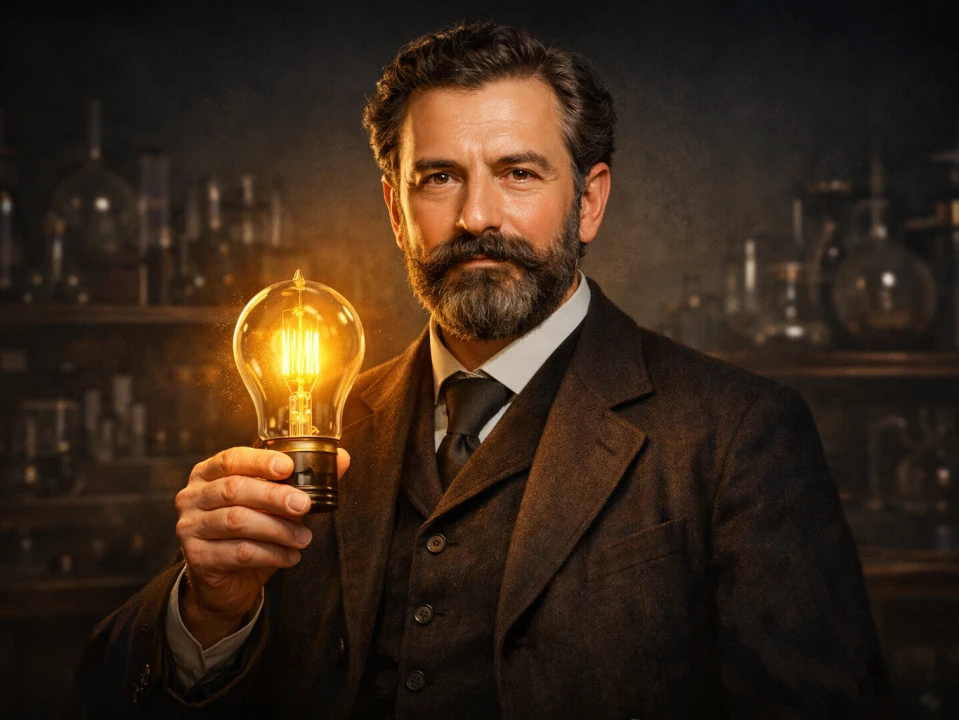
The name of Alessandro Cruto rarely comes up when we talk about the electric light bulb: that story is usually told through Thomas Edison alone. And yet, in the early years of electric lighting, Cruto’s work was serious enough to attract international attention and, for a time, to rival Edison’s own solutions.
Cruto was born in 1847 in Piossasco, near Turin, and his early experiments focused on carbon, not electricity. He was driven by an ambitious goal: creating synthetic diamonds. That project eventually failed, but it left him with an unusually deep understanding of carbon purity and structure. When incandescent lighting began to develop in the late nineteenth century, that knowledge turned out to be crucial.