
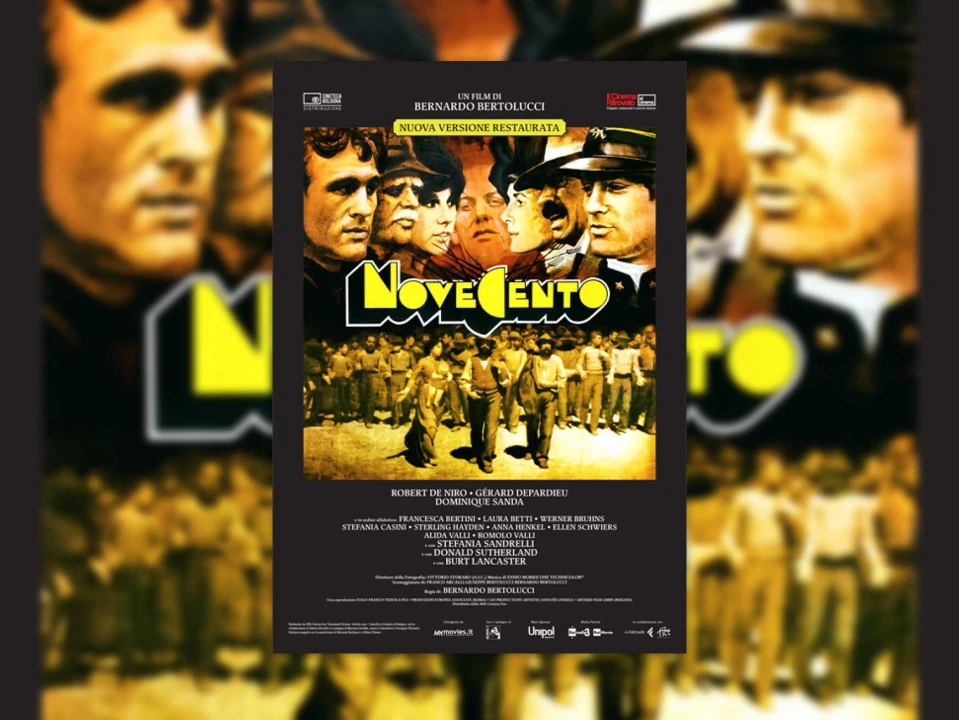
50 years after its release, Bernardo Bertolucci’s “Novecento” remains one of the most ambitious films ever produced in Italy – a cinematic epic that transformed the political, social, and emotional history of the 20th century into more than five hours of unforgettable storytelling.
Released in 1976 and set in the Emilia region where Bertolucci was born, the film followed Italy from 1900 to the end of World War II through the intertwined lives of two men born on the same day but into opposite social classes.
The movie brought together one of the most extraordinary international casts of its era. Robert De Niro played Alfredo Berlinghieri, heir to a wealthy landowning family, while Gérard Depardieu portrayed Olmo Dalcò, a peasant deeply connected to socialist ideals. The ensemble also included Burt Lancaster, Donald Sutherland, Dominique Sanda, Stefania Sandrelli, Sterling Hayden, and music by legendary Italian composer Ennio Morricone.
At 317 minutes in its original version, “Novecento” became one of the longest commercial films in cinema history. Its massive scale reflected Bertolucci’s intention to create not just a movie, but a historical fresco capable of capturing class conflict, fascism, resistance, and the transformation of rural Italy across 45 years.
The film premiered at the Cannes Film Festival in May 1976 and immediately divided critics and audiences. Some praised its visual power and political courage, while others criticized its ideological intensity and extraordinary runtime. Yet over time, “Novecento” evolved into a recognized masterpiece of international cinema and one of Bertolucci’s defining achievements.
In 2026, the film returned to the center of attention with exhibitions and retrospectives celebrating its 50th anniversary. Critics continue to describe it as a unique blend of art cinema and historical narrative – a production that combined Hollywood stars, Italian political history, and Bertolucci’s unmistakable visual style into one of the most influential European films ever made.