

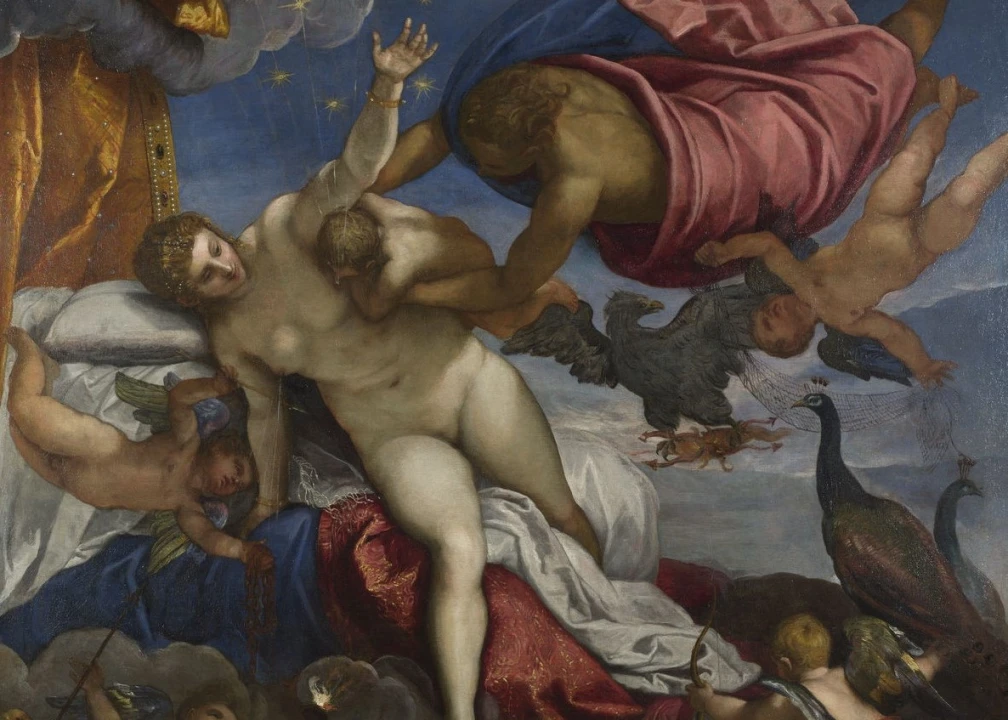
In 16th-century Venice, an artistic arms race was underway. A young painter named Tintoretto was striving to establish himself alongside—and perhaps even to eclipse—his rivals. During the Renaissance, Venice was a place where artists worked at the vanguard of painting, incorporating humanist ideas and technical innovations that arrived from Florence and Rome, and outdoing them.
Titian, the city’s leading painter, cast a long shadow over the next generation of artists. Meanwhile, Tintoretto’s contemporary Veronese was earning praise for his rich, elaborate compositions. In the midst of this competition, Tintoretto fought to secure the most prestigious commissions from the city’s churches, ducal palaces, and guilds. He also sought to distinguish himself by creating larger and larger paintings.