



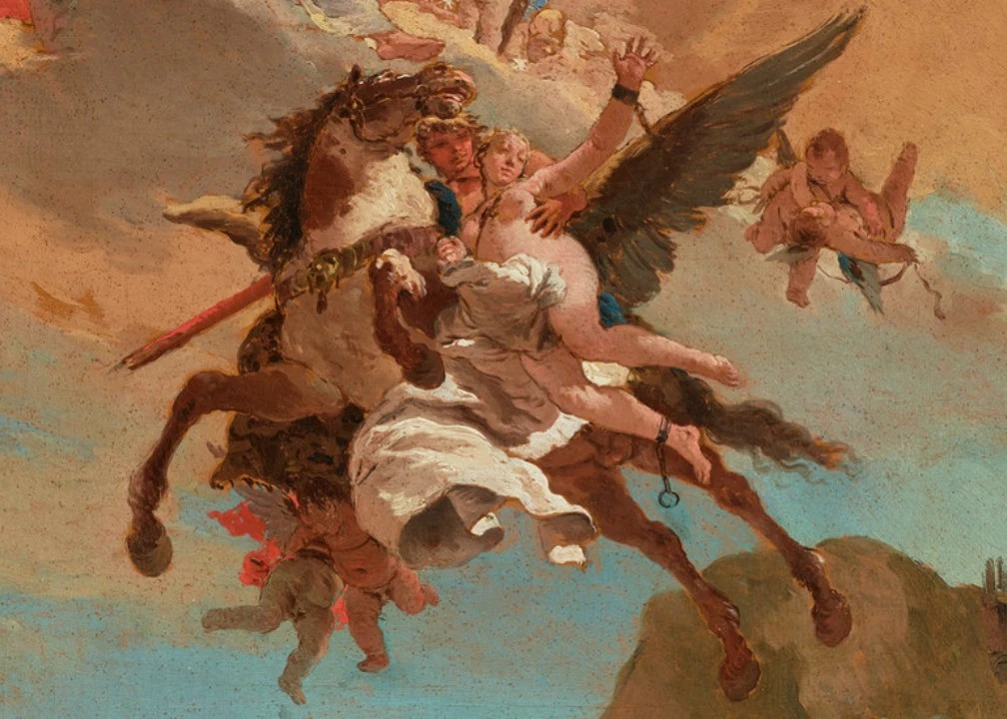
The lovers are soaring through gold. In Giambattista Tiepolo’s fresco “Perseus and Andromeda,” which was painted around 1730-31 and luxuriated across the ceiling of a Milanese palazzo, a winged horse spirits away the boyish Perseus, a heroic son of Jupiter with a mop of golden hair, who has just driven his lance into a ravenous sea monster.
He has rescued the chained Andromeda, and now they are flying; she’s nude but for the broken manacles still dangling from her wrists and ankles, and her skin is a blotchy peach tone, despite her heritage as princess of Aethiopia. Beneath them, the impaled monster wails from its horrid maw. Above, Jupiter looks benevolently upon Andromeda’s suppliant parents. Cupids flutter, nereids gawk.
