



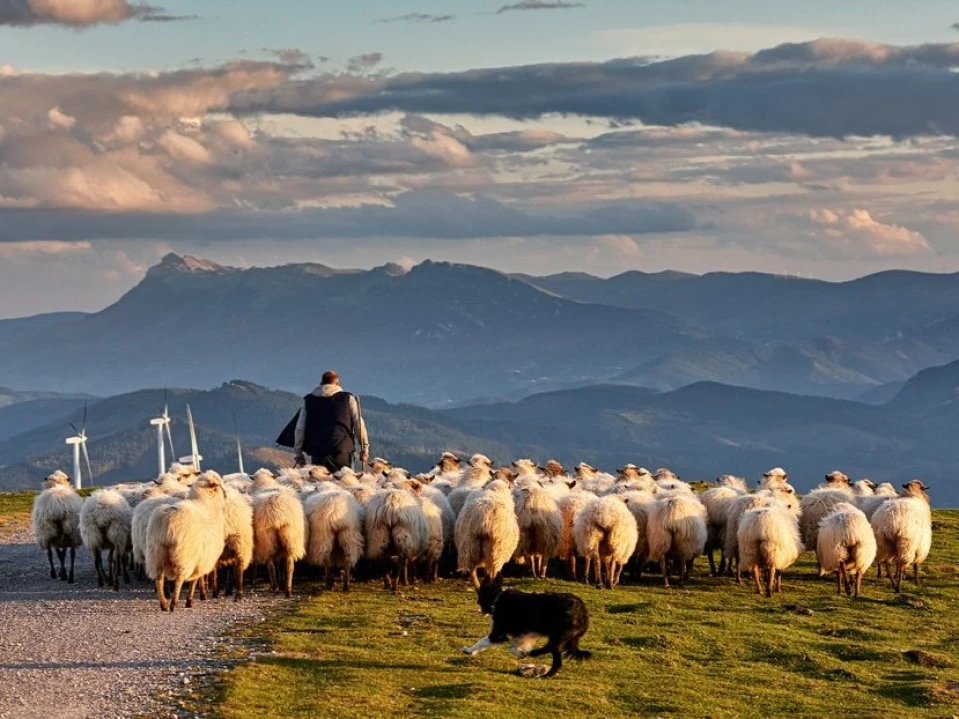
We rarely think about it when we see on Italian roads hundreds of sheep following their shepherd. Yet that ancient rite, transhumance, is a fundamental piece of Italy's agricultural culture. UNESCO has now also recognized this, yesterday proclaiming transhumance in the Alpine and Mediterranean regions, and its 38 breeds of sheep, an "intangible cultural heritage of humanity." Italy proposed the nomination, along with Austria and Greece.
Transhumance p is still widespread throughout Italy. Both in the Central South where the Regi tratturi are located, starting from Amatrice and Ceccano in Lazio to Aversa degli Abruzzi and Pescocostanzo in Abruzzo, from Frosolone in Molise to the Gargano in Puglia. Transhumant shepherds are also still active in the Alpine area, particularly in Lombardy and in the Senales Valley in South Tyrol.
Unesco's positive vote certifies the value of the traditional seasonal migration of flocks, herds and shepherds who, together with their dogs and horses, move from the plains to the mountains, traveling along the semi-natural ways of the sheep-tracks, with day-long journeys and stops at predetermined places known as "post stations."
This is an important recognition that confirms the social, economic, historical and environmental value of pastoralism, which still involves 60,000 herds in Italy despite the fact that in the last decade the Italian flock has decreased from 7.2 million sheep to 6.2 million, losing one million animals.
The other Italian intangible heritages of humanity, certified and protected by Unesco, are the Opera dei pupi (inscribed in 2008), Canto a tenore (2008), the Mediterranean Diet (2010) the Art of the Violin in Cremona (2012), the shoulder machines for the procession (2013) and the Pantelleria tree vine (2014), the 'art of the Neapolitan pizza makers (2017), Falconry (2016), and from November 2018 the "Art of dry stone walls" .
