



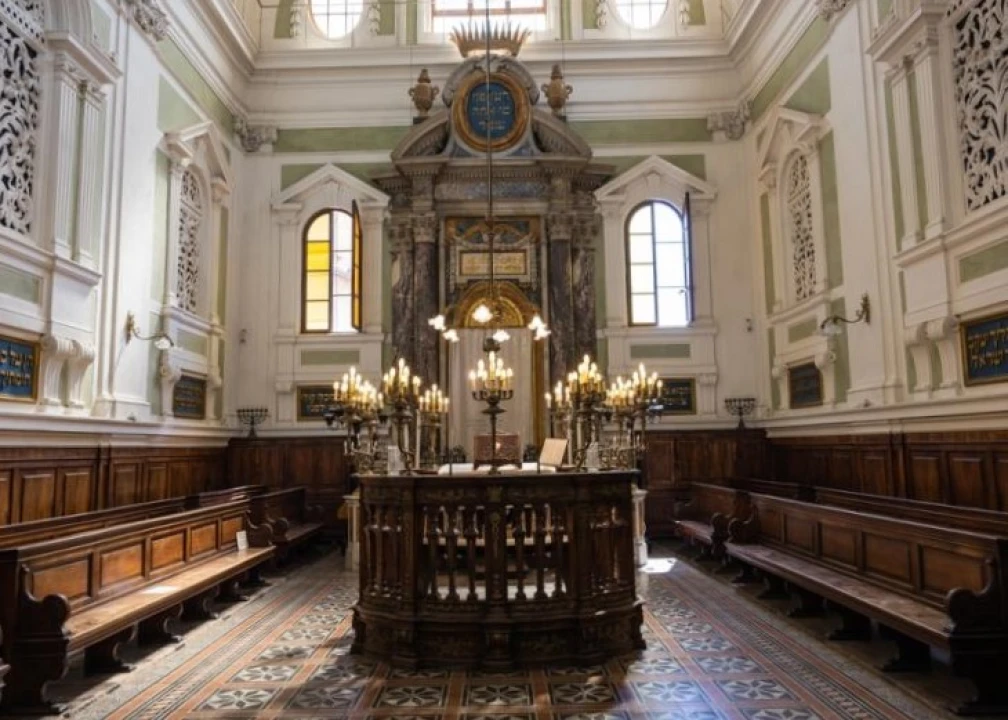
The first time I visited the Jewish ghetto in Siena was by accident. I’d just stumbled my way out of the Palazzo Pubblico — the civic seat of the Sienese Republic, today a museum — and my focus was singularly on tracking down a plate of pici for lunch. But my tunnel vision was broken by marble plaques I spotted along the street, memorializing, in Hebrew and Italian, two tragic events in the history of Siena’s Jewish population.
Peering closer, it became clear that behind this unadorned façade were Siena’s synagogue and a small museum sharing the story of the city’s Jews. Feeling that familiar push-pull of belonging and struggle, I knew then that the site would become a place of comfort for me, a Jewish American doctoral student writing her dissertation on Renaissance Siena.
