



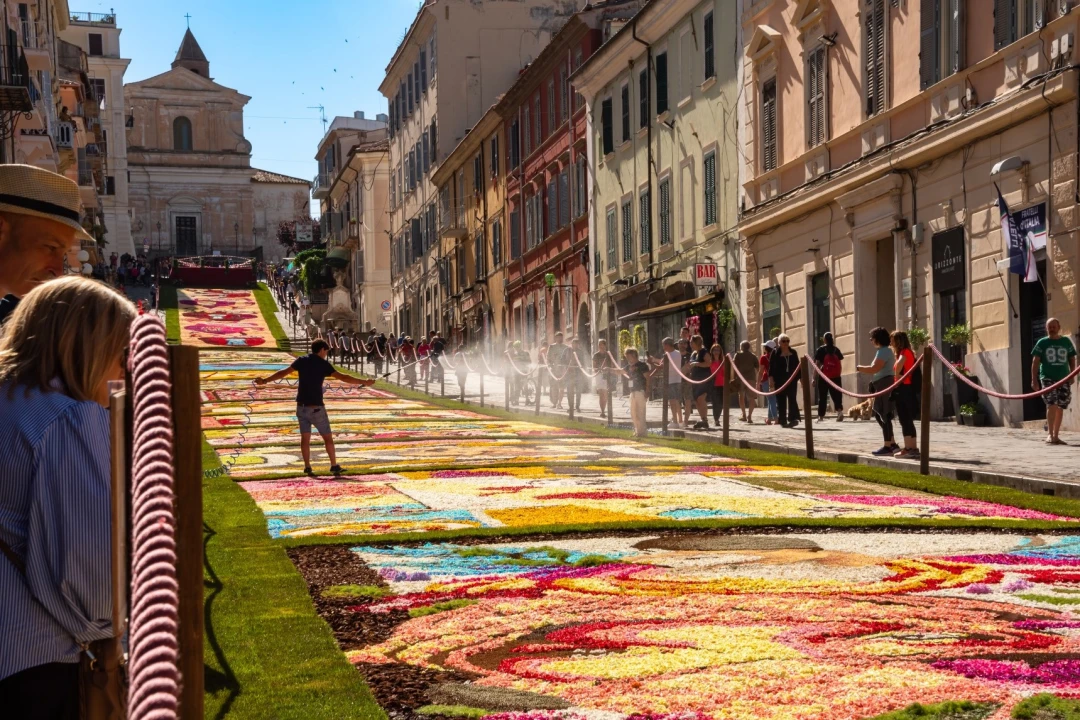
Every year, around this time, Italy enters its most colorful season: market stalls are filled with peonies and poppies, balconies are thick with geraniums, and entire hillsides bloom in coordinated palettes of wildflowers.
The country’s connection with flowers, however, goes well beyond gardens, decoration and natural beauty and, to understand it, we only need to consider the key role floriculture plays in the national economy and in daily life. Flowers are a commercial product, a form of public art, and a central element in many community rituals; they are cultivated in greenhouses, traded across borders, and laid on cobblestones during religious feasts. In towns, floral displays mark anniversaries, processions, and civic celebrations.
