



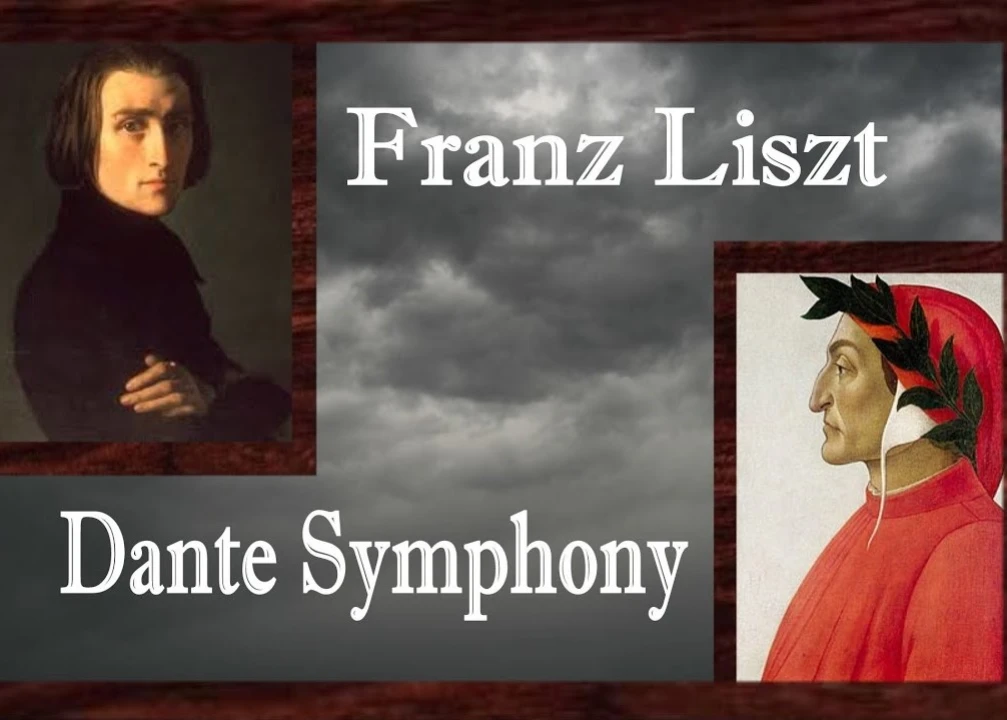
In the seven centuries since his death, writer Dante Alighieri has become inextricably linked to his fictional persona, a legacy that is preserved in literature, art, popular culture and, of course, music. Alighieri – generally referred to by his first name, Dante – was born in Florence in 1265. He began writing his most notable work, The Divine Comedy, in 1307, continuing to tinker with it until his death in 1321.
Its three volumes (Inferno, Purgatorio and Paradiso) follow the author through his journey into hell, accompanied by Roman poet Virgil, witness his ascent into purgatory and final voyage across heaven – guided by a woman named Beatrice. Dante’s contrasting descriptions of the concentric circles of hell and the purity of paradise have inspired composers ever since, but the most famous musical incarnations are by Liszt.
