



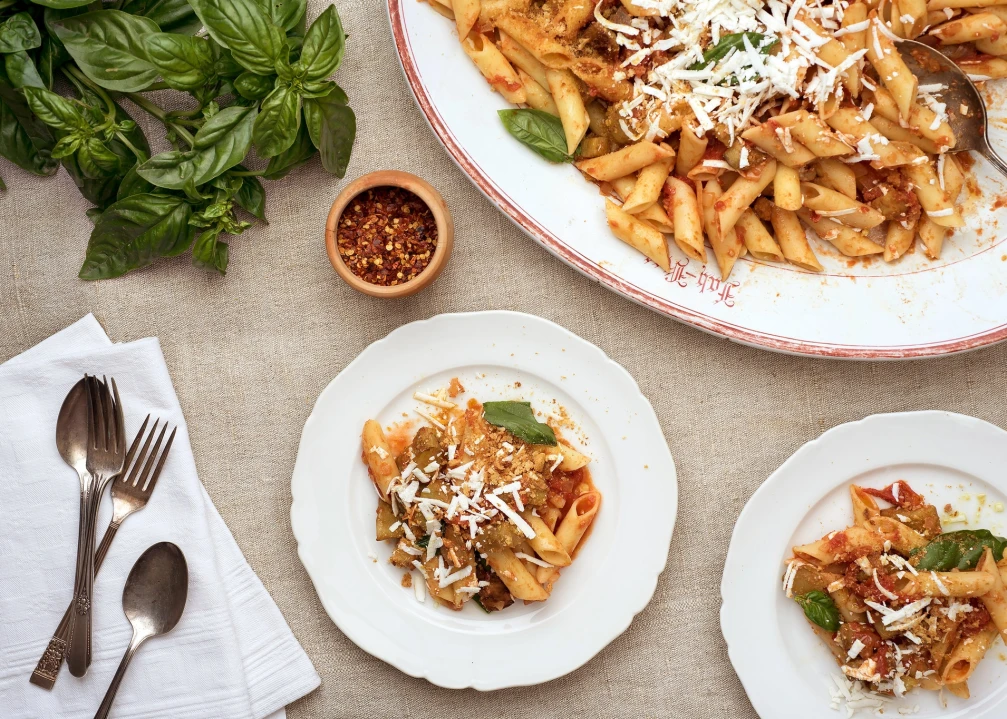
It’s hard to imagine Sicilian cooking without eggplant. You find it in every market, in every restaurant and certainly in every home kitchen. Having recently visited Sicily, I remember each eggplant binge fondly — and there were many. It is always fascinating to see how cuisines and cultures collide. Sicily has been fought over and ruled by many peoples over the last 2,500 years, starting with the ancient Greeks. Each conquering group introduced ingredients from its home turf, adding layers to an ever-evolving local cuisine: The Greeks planted grapes and olives, the Romans contributed wheat.
But it wasn’t until the early Middle Ages, under Byzantine and Muslim rule, that eggplant became part of the everyday Sicilian diet. Eggplant, originally cultivated in South Asia, had long been a staple of Arabic cookery; now it is popular throughout most of the Mediterranean. The Spanish introduced tomatoes and peppers from the New World, two other ingredients that now lie at the heart of Sicilian cooking. Sicilian cuisine today is varied, with beloved regional recipes and all manner of extravagant food for feast days, as well as incredible fish and shellfish from the coastline.
