



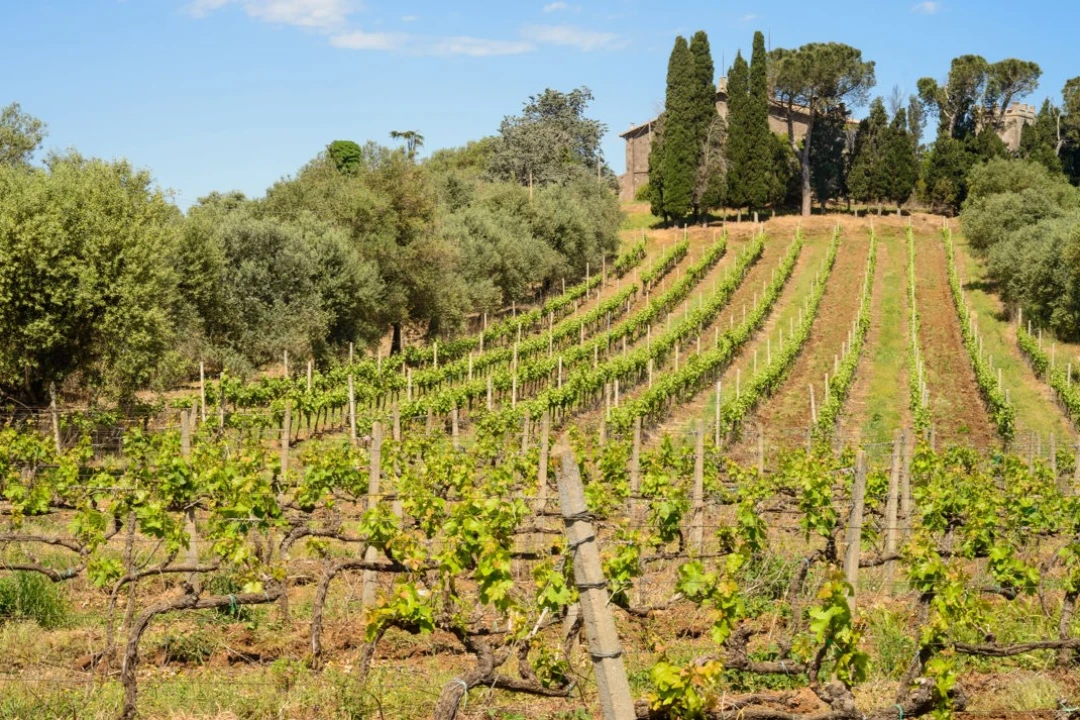
Today, across volcanic lake Bolsena from the town of Gradoli, in the Viterbo province, created in 1927, of the north of Lazio, region of Rome, in the Teverina valley where on its way to the Italian capital the Tiber river runs with the Cimini apennines by Lazio’s border with the Umbria region at the train station of Alviano where a dam built in 1963 made the shallow WWF Alviano lake oasis, along a line that defines the comune of Castiglione di Teverina and, southward, that of Civitella D'Agliano are some of the top sites for growing the Tuscia zone’s Violone red wines.
Cultivated along with star white-wine Grechetto, in this place of valley, castles, towns small and steep and a little forgotten elsewhere, of superposition of Etruscans’ places and pieces of Papal State Umbria turned Italy in 1860 against the final decade of Rome’s sovereignty and of Tuscany once Duchy, passed through by those on Grand Tours from Florence to Rome and who provide much of the zone’s written history, Violone is conjointly prosperous and cheerfully brash Montepulciano, winegrape grown widely throughout Italy, included in one-third of Lazio’s DOCs, and of uncertain origins within the nation.
